

Introduction
Knowledge transfer failures in Global Capability Center transitions rarely show up during handover. They surface later, after go‑live, as quiet underperformance, with delivery slowing, decisions drifting back onshore, and ownership remaining tentative even though nothing is visibly broken.
That pattern matters more today than it once did. With the global GCC market valued at over $600 billion in 2025 and growing at close to 8% annually, expectations have shifted from cost arbitrage toward genuine capability contribution1. A GCC that underdelivers is no longer just inefficient, it becomes a strategic drag.
When transitions struggle, the instinct is often to examine training quality or documentation depth. In practice, those are rarely the root causes, because most knowledge transfer failures are structural rather than instructional. They are shaped by early design choices, by how success is defined, and by what happens immediately after go‑live.
Where Knowledge Transfer Actually Fails
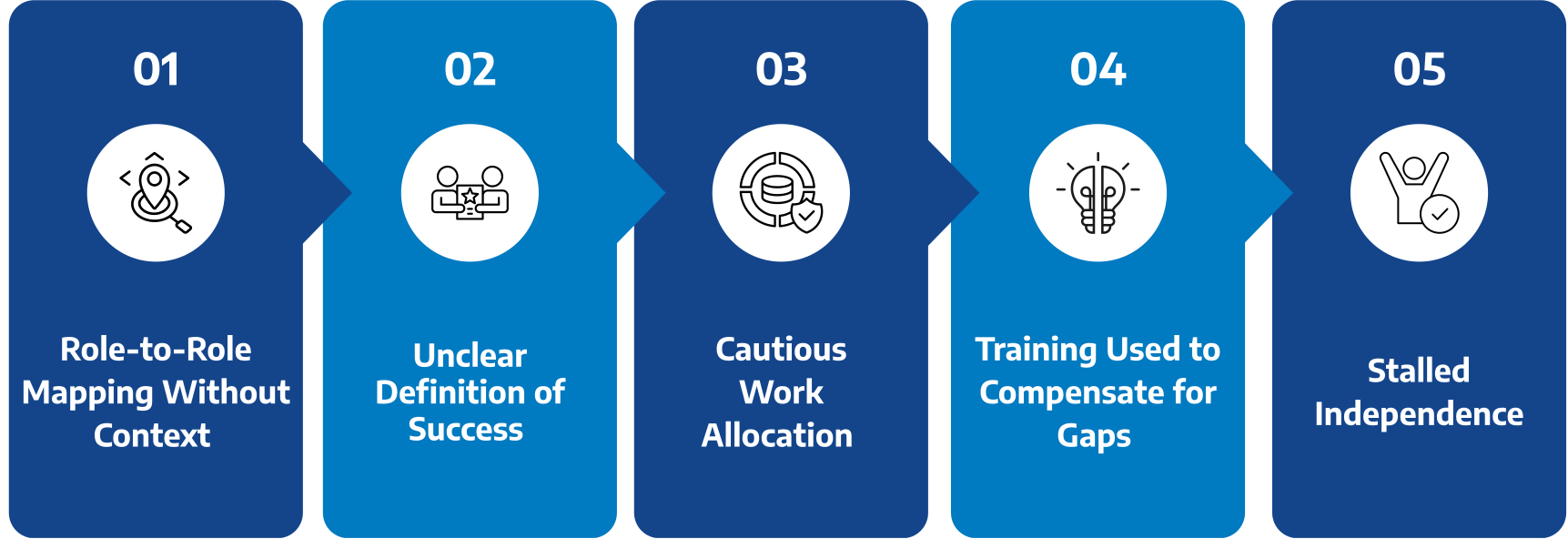 This pattern repeats across industries and transition models.
The Design Mistake Most Transitions Make
Before asking how knowledge will transfer, there is a more fundamental question that often goes unasked. Has the team been designed correctly for the product being transitioned?
Many GCC transitions rely on role‑to‑role replacement, where a software engineer replaces a software engineer and a senior engineer replaces a senior engineer. This keeps planning simple, but it assumes that job titles capture the full shape of the work, which they do not.
Titles hide tenure, context, and judgment. Engineers who have spent years on a product carry architectural intuition and historical decision context that never fully shows up in documentation. Replacing that accumulated understanding with someone at the same nominal level introduces a gap that only becomes visible when the team is expected to operate independently.
Product maturity widens or narrows this gap.
| Product stage | Years in production | Typical transition duration | Experience calibration |
| Innovating | 0 – 5 | 3 – 6 months | Match onshore tenure |
| Maturing | 5 – 10 | 6 – 9 months | Senior calibration required |
| Retiring | 10+ | 9 – 12 months | Senior calibration required |
When experience calibration does not match product maturity, teams spend disproportionate time ramping instead of contributing. What later looks like a knowledge transfer issue is often a design flaw introduced at the very beginning.
Defining When Knowledge Transfer is Complete
Even well‑designed transitions struggle without a clear definition of “done.”
In the absence of one, completion is inferred from activity. Training sessions are delivered, documents are shared, and shadowing cycles conclude, creating the impression that knowledge has moved even when ownership has not.
A more defensible definition focuses on delivery behavior rather than training completion. Knowledge transfer is meaningfully complete when the offshore team demonstrates comparable reliability and independence within an agreed scope.
What “Done” Actually Looks Like
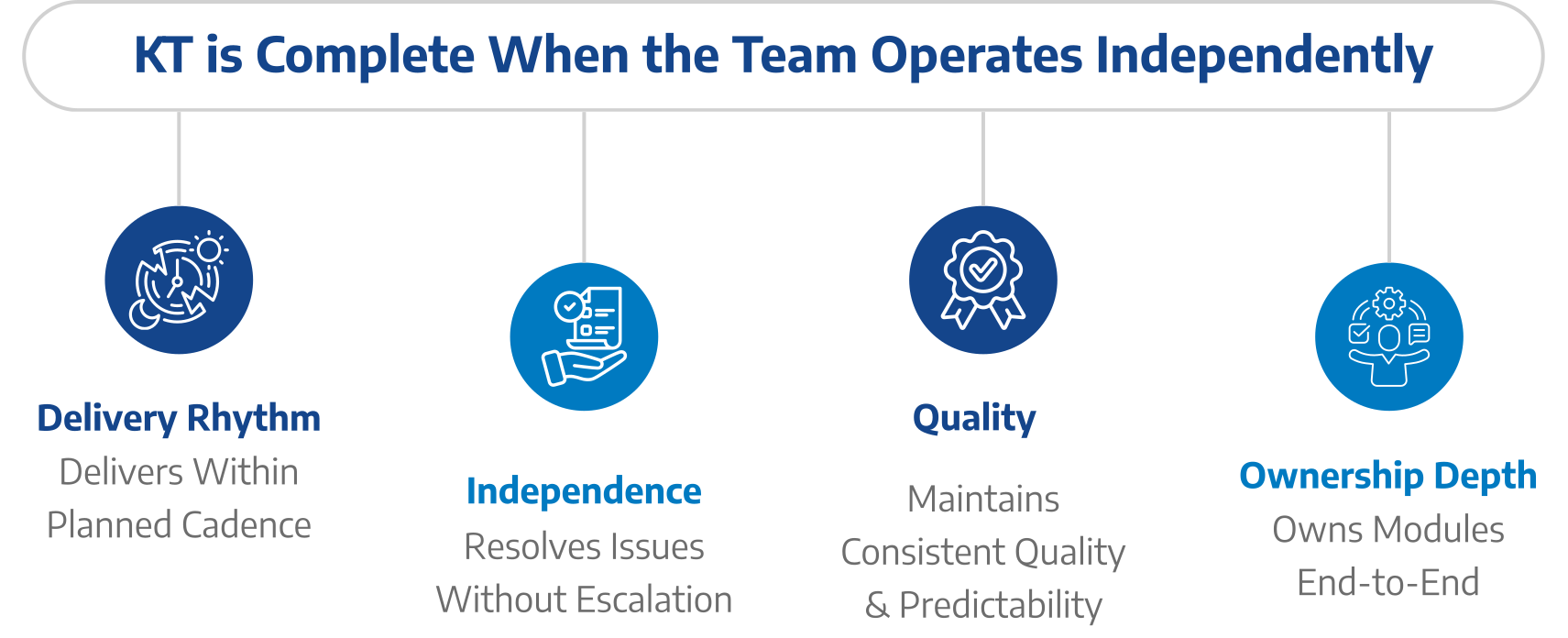
Measurement enables this clarity. Establishing a baseline before transition creates a shared reference point, and tracking delivery frequency, cycle time, predictability, and quality provides a common language for readiness.
Engineering measurement frameworks such as the Aeries Engineering Measurement Framework (EMF) help structure this across maturity stages, tracking delivery flow, process health, product quality, and business impact as teams move from ramp‑up toward sustained performance.
A simple way to pressure‑test this part of the transition is to ask:
- Is there an agreed productivity baseline from before the transition?
- Are a small number of delivery metrics used consistently by both teams?
- Is progress toward independence reviewed using data rather than instinct?
If these questions cannot be answered clearly, knowledge transfer has no defensible definition of completion.
Knowledge transfer is complete only when delivery no longer requires escalation.
Why Knowledge Fades After Go-Live
Some of the most expensive failures occur after handover is officially complete. Even after training is complete and metrics are in place, offshore teams often struggle to build momentum. In most cases, the issue is not capability, but what happens once the team is expected to operate independently.
That moment shifts the transition from learning to execution, and it is where work allocation becomes decisive.
When engineers are rotated across modules too quickly or consistently assigned low‑risk work, they never stay with a problem long enough to develop judgment. Each shift resets the ramp‑up curve, and the team never gets the chance to build on what it has learned.
The Quiet Drift Pattern
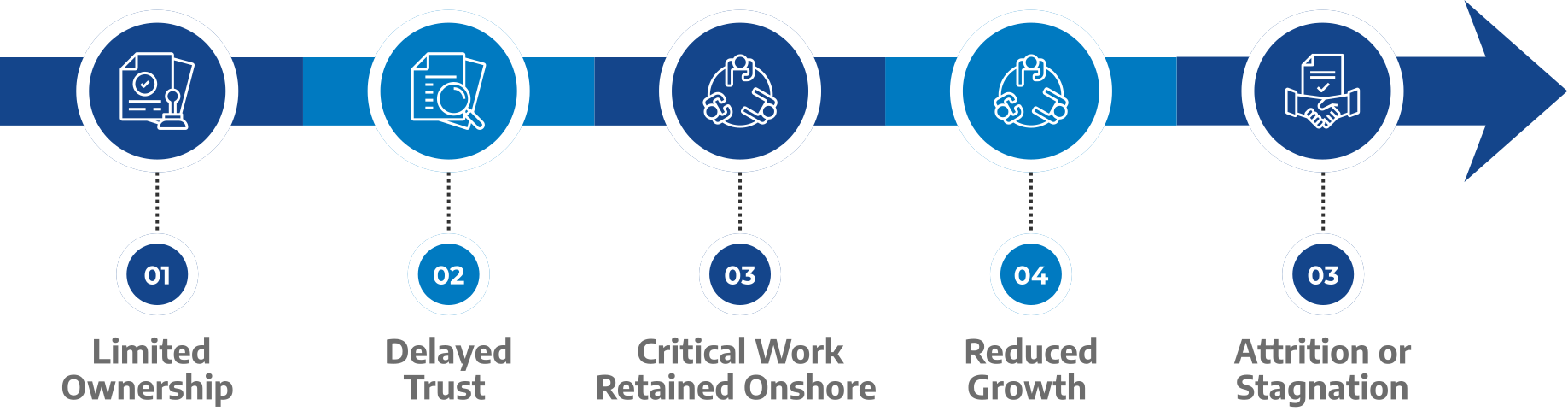
This erosion shows up in delivery outcomes and in retention. Voluntary attrition in Indian GCCs currently sits at around 12.6%, with lack of career growth and quality of work cited as leading reasons people leave2. When capable teams are repeatedly kept away from meaningful ownership, they draw their own conclusions about what the center is meant to be.
Early warning signals usually appear within weeks:
- Critical deliveries continue to sit onshore despite offshore capacity
- Teams rotate frequently across problem areas
- Productivity metrics flatten without clear technical causes
- Engineers express frustration about ownership
The first 6 weeks after go‑live are often decisive.
Training Alone Does Not Fix Structural Gaps
Training attracts attention because it is visible and actionable, but it cannot reliably correct weak structure.
In many organizations, documentation lags reality. Design decisions evolve, product behavior shifts, and critical context lives in people’s heads. In this environment, remote, on‑the‑job training alone is an unreliable way to transfer deep knowledge.
Choosing the Right Training Model
| Documentation Strength | Product Maturity | Recommended KT Model |
| Strong | Across maturity levels | Structured remote KT |
| Moderate | Across maturity levels | Hybrid KT |
| Weak | Mature or legacy systems | In-person immersive KT |
*This is a directional guide. In practice, the right approach also depends on transition stage and system complexity.
AI‑assisted tools that help engineers query codebases can accelerate learning, but they are accelerators, not substitutes. Training works best when it reinforces sound design and ownership structures rather than compensating for them.
When Good Plans Stall Anyway
Even with strong design, clear measurement, and appropriate training, transitions can stall for organizational reasons.
When leadership is unclear about the intended role of the GCC, behavior changes. As work allocation tightens, knowledge transfer becomes more conservative and ownership remains ambiguous, rarely because of resistance and more often because of uncertainty.
In this context, change management is not a parallel initiative but the mechanism that allows the system to function as intended.
Organizations rarely say they do not trust the GCC. They simply keep postponing the moment when trust would need to be demonstrated, and repeated often enough, that postponement becomes policy.
A CXO Playbook for GCC Knowledge Transfer
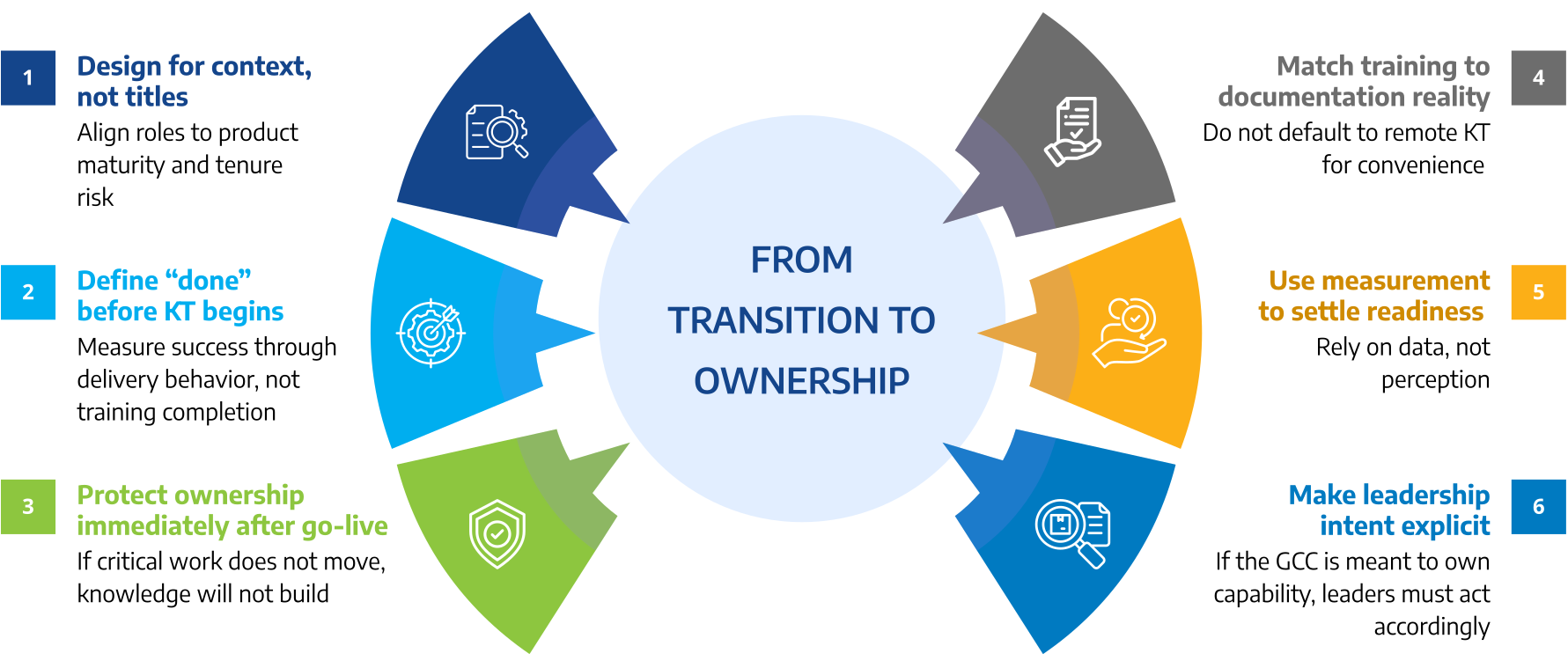
Designing for What Happens After the Plan Ends
When a GCC transition underdelivers, the cause is rarely a missing document or an underperforming engineer. The problem usually sits in the system around the transition, not in day‑to‑day execution.
That system shapes what the team is allowed to own, how success is defined, and how quickly trust is extended. When roles lack context, ownership breaks down too early, training is expected to fill the gap, and leadership intent remains unclear.
By the time a transition looks slow, tentative, or overly dependent, the failure is rarely in the handover itself. It lies in the design decisions that shaped what the team was allowed to become. Most knowledge transfer failures are locked in before the first offshore engineer is hired.
Source:
1. Mordor Intelligence, Global Capability Centers Market Size & Share Analysis – Growth Trends and Forecast (2026–2031)
2. HR Today, Talent500 Report Reveals Key Shifts in GCC Salary and Retention Trends


