

Key Takeaways: GCC vs Outsourcing
- Enterprises are increasingly shifting from vendor-led outsourcing to enterprise-owned Global Capability Centers (GCCs).
- India remains the leading destination for offshore development centers due to its engineering talent depth, operational maturity, and digital ecosystem.
- GCCs provide stronger control over intellectual property, innovation, governance, and long-term scalability compared to traditional outsourcing models.
- Modern offshore development centers are evolving into Centers of Excellence (CoEs) focused on AI, digital engineering, cloud, and cybersecurity.
- Build-Operate-Transfer (BOT) models are accelerating GCC adoption by reducing setup complexity and improving speed-to-scale.
Introduction: Why the GCC vs Outsourcing Debate Has Changed
For years, outsourcing was viewed as the fastest and most economical way for global enterprises to scale. It delivered predictable cost savings, quick offshore access, and service-level accountability.
However, as technology becomes central to competitive advantage, enterprises are re-evaluating this model.
Today, organizations are moving beyond transactional outsourcing toward Global Capability Centers (GCCs), often structured as an offshore development center in India designed to support long-term engineering, AI, and digital transformation initiatives. Unlike outsourcing, GCCs are built to create long-term innovation capability rather than short-term delivery capacity.
In this evolving GCC vs outsourcing landscape, India has emerged as the undisputed global leader. From Fortune 500 enterprises to fast-growing SaaS companies, organizations consistently choose India to establish offshore development centers that support engineering, analytics, AI, cybersecurity, and enterprise transformation initiatives.
This shift is no longer driven solely by labor arbitrage. It is driven by strategic value creation.
What Is the Difference Between GCC and Outsourcing?
Outsourcing is a vendor-managed delivery model governed by contracts and SLAs.
A Global Capability Center (GCC), often operating as an offshore development center, is an enterprise-owned model responsible for long-term capability building, innovation ownership, and strategic transformation.
This distinction is formally reflected in NASSCOM’s GCC framework, which positions GCCs as strategic extensions of the parent enterprise rather than traditional offshore cost centers.
Key Differences: GCC vs Outsourcing
Although both models leverage offshore talent, an offshore development center operates with significantly greater enterprise ownership, governance control, and innovation alignment than traditional outsourcing arrangements.
At a Glance Comparison
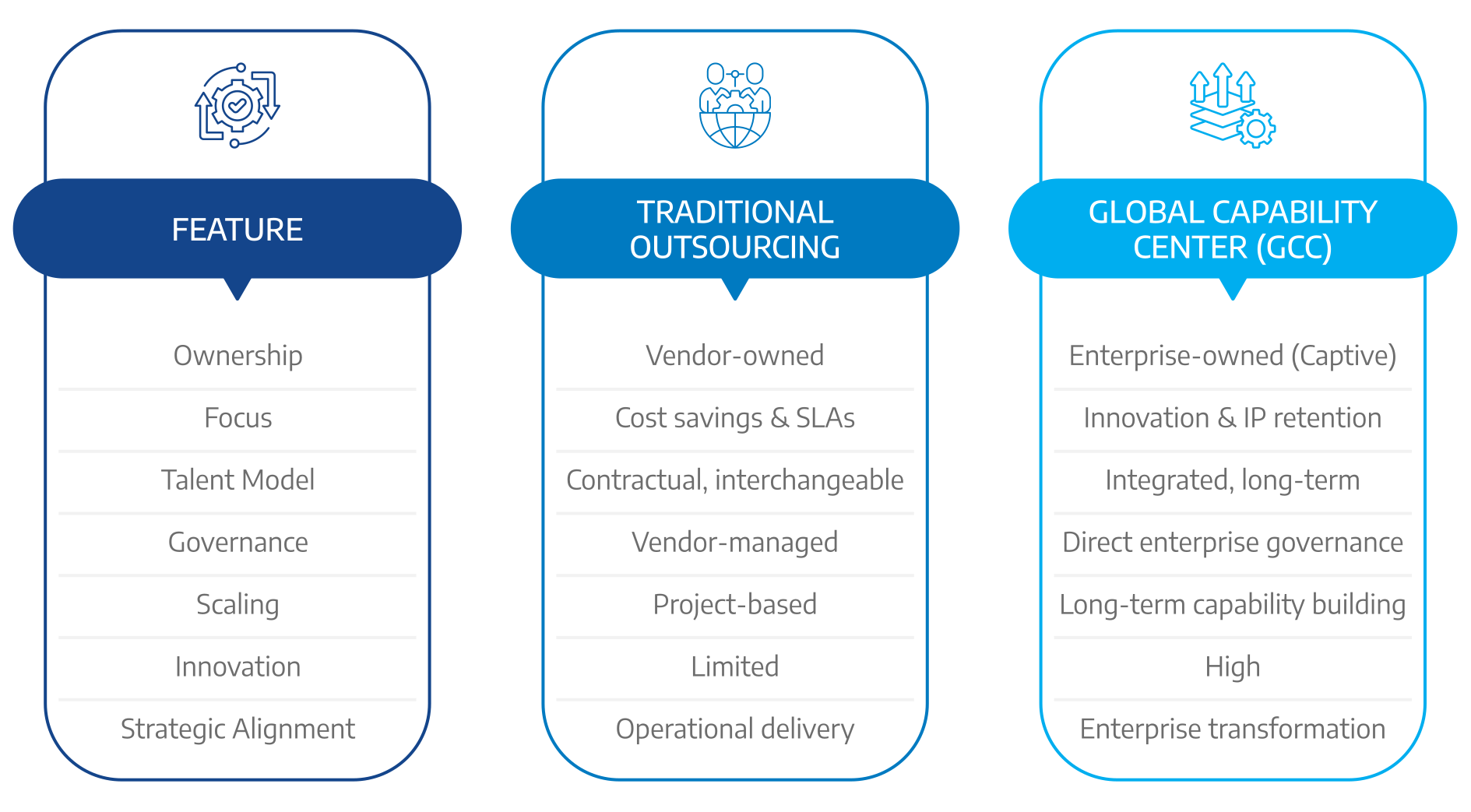 Outsourcing optimizes delivery cost.
GCCs optimize enterprise value creation, innovation ownership, and long-term scalability.
This distinction is one of the primary reasons enterprises are increasingly shifting toward offshore development centers structured as GCCs.
Why Companies Are Moving Beyond Traditional Outsourcing
Traditional outsourcing remains effective for highly standardized and transactional work. However, modern enterprises increasingly require stronger control over product development, innovation cycles, enterprise data, and digital engineering capabilities.
Vendor-managed models can create limitations around:
- Institutional knowledge retention
- Product continuity
- Innovation ownership
- Governance visibility
- Strategic agility
As AI, cloud transformation, cybersecurity, and platform engineering become central to enterprise competitiveness, organizations are prioritizing offshore development centers that operate as integrated business extensions rather than external delivery vendors.
This shift is one of the primary reasons GCC adoption continues to accelerate globally.
From Cost Arbitrage to Centers of Excellence (CoEs)
Traditional outsourcing historically relied on talent arbitrage, leveraging wage differentials to improve operational efficiency. While effective for standardized work, this model often limits innovation, agility, and long-term ownership.
Offshore development centers structured as GCCs are designed to evolve into Centers of Excellence (CoEs) that support:
- Digital engineering
- Platform ownership
- AI and data innovation
- Cybersecurity transformation
- Cloud modernization
- Enterprise automation initiatives
This evolution explains why GCCs increasingly dominate product engineering, SaaS development, R&D functions, and enterprise transformation programs.
Many enterprises initially evolved from traditional outsourcing into shared services structures focused on operational consolidation. However, modern GCCs and offshore development centers now operate at a significantly more strategic level, supporting product engineering, AI innovation, cybersecurity, and enterprise transformation rather than only centralized business operations.
Why India Leads the Global Offshore Development Center Ecosystem
India’s leadership in the offshore development center market is not the result of short-term labor advantages alone.
It is the outcome of over two decades of ecosystem maturity, engineering evolution, and enterprise integration.
According to industry estimates from NASSCOM and Deloitte:
- India hosts over 1,700 GCCs
- GCCs employ more than 1.9 million professionals
- The Indian GCC market is projected to exceed $100 billion in the coming years
India has evolved from a traditional outsourcing destination into a global digital engineering powerhouse.
Why enterprises prefer an offshore development center in India:
1. Unmatched Engineering Talent Depth
India produces one of the world’s largest pools of STEM graduates annually.
Beyond volume, Indian professionals possess extensive experience across:
- AI & machine learning
- Cloud engineering
- Platform development
- DevOps
- Cybersecurity
- SaaS engineering
- Enterprise architecture
Reports from McKinsey, Accenture, and EY consistently highlight India’s growing specialization in next-generation digital engineering capabilities.
2. Mature GCC Operating Ecosystem
India’s GCC ecosystem is highly mature across:
- Legal frameworks
- Compliance infrastructure
- Real estate readiness
- Leadership talent
- Vendor ecosystem support
- BOT implementation capability
This reduces execution risk and accelerates time-to-value for enterprises building offshore development centers.
3. Strong Build-Operate-Transfer (BOT) Model Adoption
India is one of the world’s most mature markets for Build-Operate-Transfer (BOT) GCC setups.
The BOT model allows enterprises to:
- Launch faster
- Reduce setup complexity
- Access pre-built operational infrastructure
- Transition ownership gradually
- Minimize early-stage execution risk
This operating flexibility is especially attractive for mid-market enterprises and PE-backed portfolio companies entering India for the first time.
Talent Depth as a Structural Advantage
Public data from World Bank, UNESCO, and NASSCOM consistently positions India among the world’s largest producers of engineering and STEM graduates.
Beyond talent volume, India offers deep specialization in:
- Cloud engineering
- AI and machine learning
- Enterprise platforms
- Data engineering
- SaaS product development
- Cybersecurity operations
Reports from McKinsey and Accenture continue to highlight India’s growing dominance in digital engineering and enterprise technology transformation.
Data Snapshot: Growth of GCCs in India
| Year | Estimated GCC Count | Enterprise Focus |
| 2020 | 1,300+ | Cost + resilience |
| 2022 | 1,500+ | Digital acceleration |
| 2024 | 1,700+ | Product ownership |
| 2026 | 2,000+ (Projected) | AI & innovation hubs |
India-based offshore development centers are no longer support functions. They are increasingly operating as global innovation engines driving enterprise transformation and product ownership.
Operating Efficiency Beyond Cost Savings
While cost efficiency remains important, India’s offshore development center advantage extends far beyond labor arbitrage. Organizations benefit from operational maturity created by experienced leadership talent, scalable delivery frameworks, and established engineering ecosystems.
India-based GCCs frequently evolve into Centers of Excellence supporting global innovation, automation, AI adoption, and digital acceleration. This transformation is significantly harder to achieve within traditional outsourcing arrangements where incentives are primarily tied to service delivery metrics.
By establishing an offshore development center in India, enterprises gain the flexibility to innovate, experiment, and scale without the operational rigidity associated with vendor-managed models.
Managing Governance and Global Teams
A common concern for enterprises evaluating an offshore development center is governance and operational control, particularly for organizations headquartered in the US or Europe.
India’s long-standing integration with global enterprises significantly reduces these challenges. Indian GCC teams are highly experienced in distributed collaboration, agile delivery methodologies, and enterprise governance frameworks.
Over time, many offshore development centers develop local leadership layers mirroring onshore organizational structures, enabling decentralized execution without compromising accountability or visibility.
This operating model allows enterprises to maintain strategic control while benefiting from the scalability and execution speed of offshore teams.
India’s City-Level GCC Ecosystems
Another reason India dominates the GCC vs outsourcing conversation is the availability of multiple mature technology ecosystems.
Cities such as Bangalore, Hyderabad, Pune, Chennai, and NCR provide specialized talent ecosystems aligned to different technology and industry requirements.
These cities offer:
- Strong digital infrastructure
- Skilled engineering talent
- Startup ecosystems
- Academic institutions
- Mature enterprise support networks
Additionally, Tier-2 cities are emerging as attractive offshore development center expansion hubs, offering cost advantages without compromising talent quality.
This geographic diversity enables enterprises to adopt scalable hub-and-spoke operating models while diversifying operational risk across India.
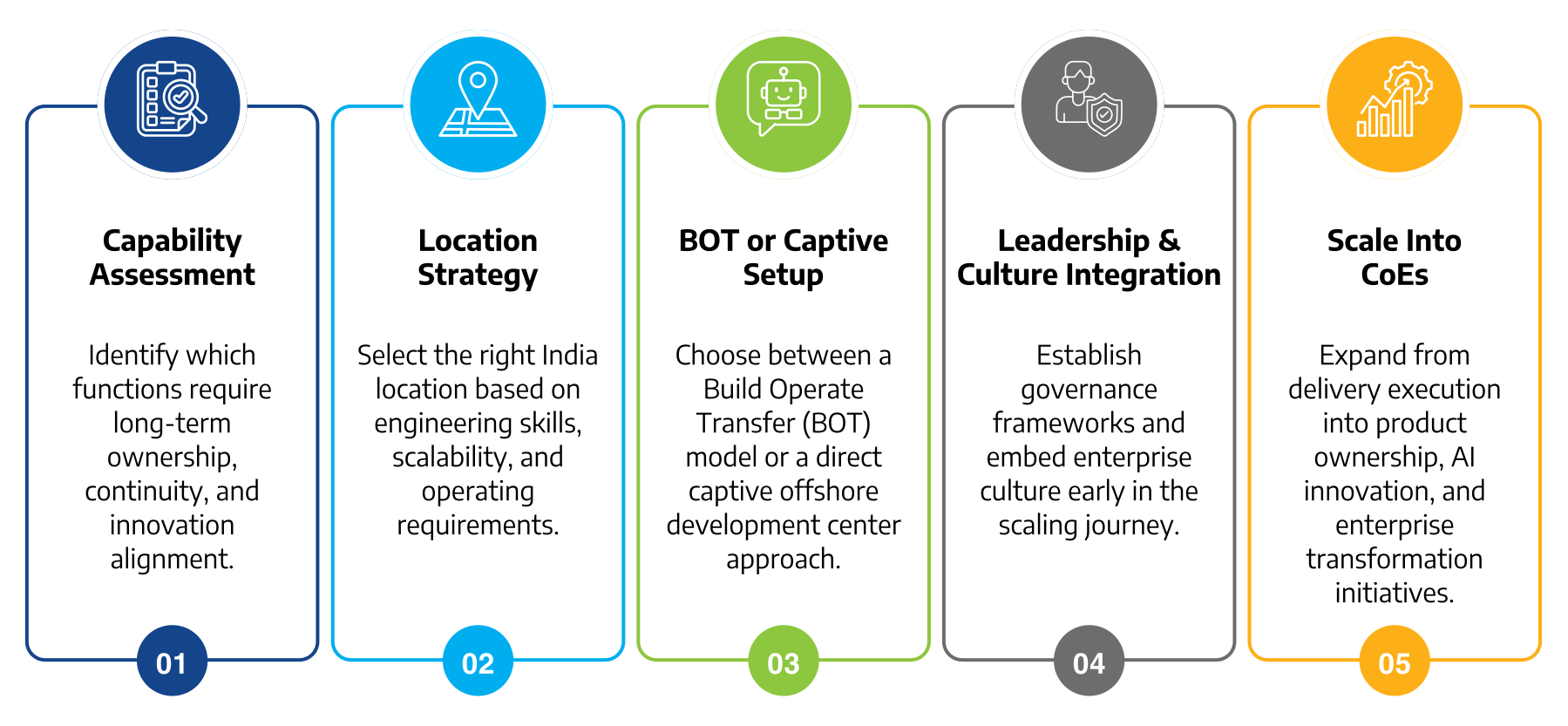
5 Steps to Transition from Outsourcing to a GCC
When a GCC Becomes the Better Strategic Choice
Traditional outsourcing remains highly effective for:
- Short-term operational needs
- Standardized support functions
- Temporary delivery expansion
- Cost optimization initiatives
However, a GCC becomes strategically superior when:
- Intellectual property ownership matters
- Technology drives competitive differentiation
- Long-term product continuity is required
- Innovation velocity becomes a priority
- Enterprise transformation requires stronger governance and control
For many organizations, an offshore development center structured as a GCC delivers compounding strategic value over time.
Conclusion: India as the Global Benchmark for Offshore Development Centers
The shift from outsourcing to GCCs reflects a broader transformation in how enterprises build and scale global capabilities. As organizations prioritize ownership, innovation, resilience, and AI-driven transformation, the limitations of purely vendor-managed models are becoming increasingly apparent.
For many enterprises, the offshore development center model has evolved from a cost optimization strategy into a long-term platform for innovation, digital engineering, and enterprise capability building.
India’s unmatched combination of engineering talent, ecosystem maturity, operational scalability, and GCC expertise has firmly established it as the world’s leading destination for offshore development centers.
In the ongoing GCC vs outsourcing debate, India is no longer simply a preferred offshore location. It has become a global benchmark for enterprise capability transformation.
Sources:
• NASSCOM & Zinnov – India GCC Landscape Report 2024
• Deloitte – India Strengthens Its Position as the Global Epicentre for GCCs
• McKinsey – Future of Engineering Talent Reports
• EY – Global Capability Center Studies
• World Bank – STEM Workforce Data
• Economic Times – India GCC Growth Forecast
• Fortune India – GCC Expansion Trends


