
Introduction
A Center of Excellence (CoE) is a structured way to scale critical capabilities across an organization while maintaining consistency, quality, and governance. When designed well, a CoE accelerates execution and reduces risk. When designed poorly, it becomes bureaucracy. Understanding how to build a CoE that delivers measurable outcomes requires disciplined choices around mandate, governance, and operating model from the outset.
Despite their popularity, many CoEs fail to create real value. They turn into advisory bodies with limited authority, compliance-heavy functions disconnected from operations, or central teams that slow decision-making. The issue is rarely the idea itself. It is almost always execution.
Why organizations struggle to build effective CoEs
Most CoE failures can be traced to three root causes: unclear mandate, weak governance, and distance from day-to-day execution. Organizations launch CoEs without defining decision rights, success metrics, or scope boundaries. Teams are staffed based on availability rather than credibility. As a result, standards are created but not adopted, guidance is issued but ignored, and the CoE is perceived as overhead rather than leverage.
A CoE that lacks authority becomes advisory by default. One that lacks operational relevance quickly loses trust.
A practical Center of Excellence framework for building a CoE
Building a CoE requires deliberate design across five dimensions: mandate, operating model, governance, talent, and metrics.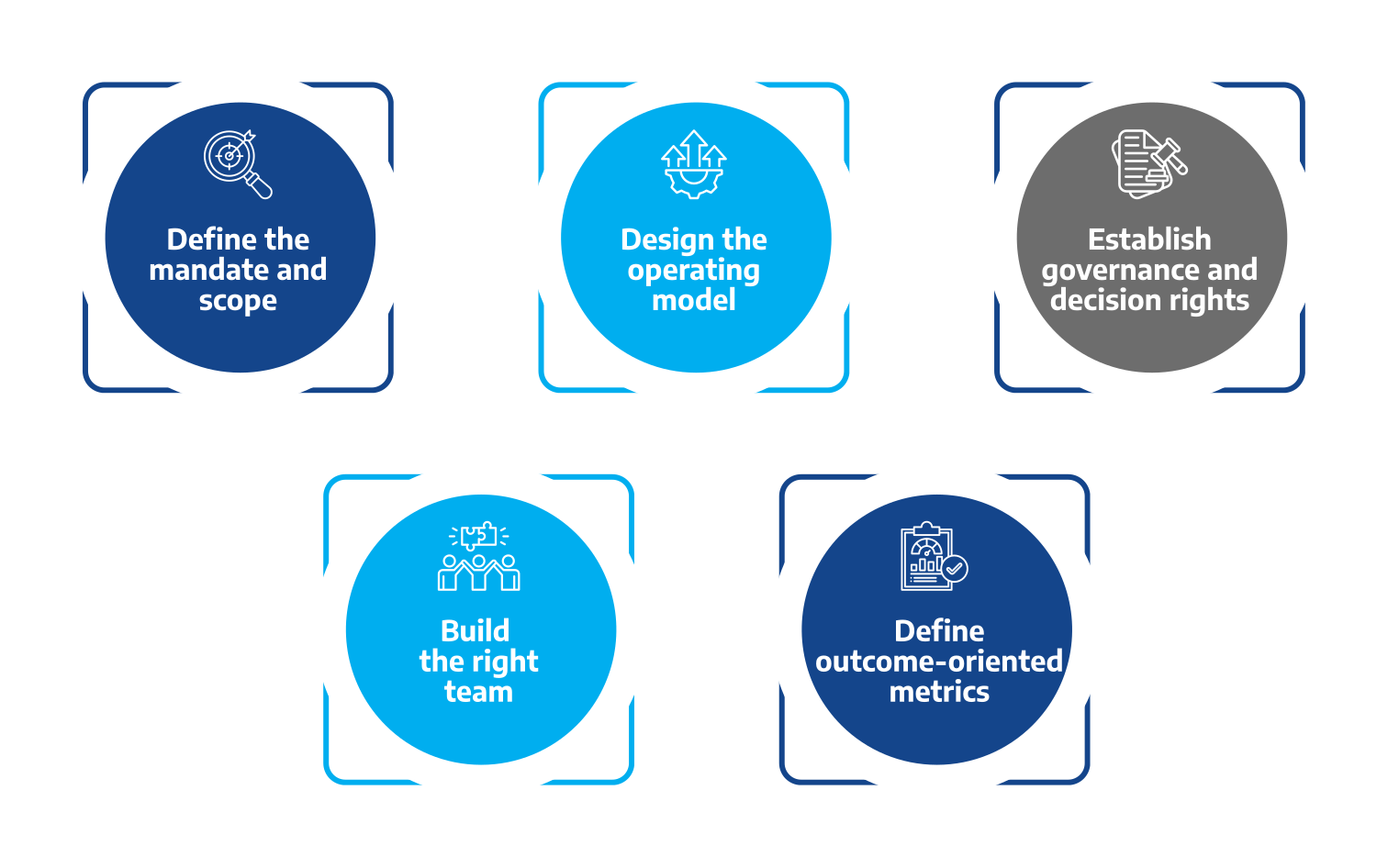
- Define the mandate and scope
Start with precision. Clearly articulate what the CoE owns, what it influences, and what it does not do. Ownership might include standards, methodologies, capability development, and performance oversight. It should rarely include end-to-end delivery. Clear boundaries prevent scope creep and allow the CoE to focus on impact rather than activity. - Design the operating model
The operating model defines how the CoE interacts with the rest of the organization. Centralized models offer control but risk becoming bottlenecks. Federated models scale faster but require strong governance to maintain consistency. Hybrid models often work best, with central ownership of standards and embedded expertise within business teams. The wrong operating model creates friction quickly: too much centralization slows execution, while too much federation weakens accountability. - Establish governance and decision rights
A credible CoE governance framework makes decision-making faster, not slower. Define who sets standards, who approves exceptions, and how conflicts are resolved. Decision rights should be explicit and documented. Executive sponsorship is essential, not symbolic. Without visible leadership backing, the CoE will struggle to enforce standards or prioritize investments. - Build the right team
A CoE should be staffed with practitioners who have real execution experience, not just theoretical knowledge. The team must combine domain depth with the ability to influence senior stakeholders. Change management capability is critical. A CoE that cannot drive adoption, regardless of how strong its frameworks are, will fail to deliver value. - Define outcome-oriented metrics
Measuring CoE success requires moving beyond activity metrics. The true test is impact. Relevant measures include adoption of standards, reduction in rework, improved time-to-market, risk reduction, or cost efficiencies driven by reuse and consistency. Measuring CoE success should link directly to business outcomes, not internal output.
Common mistakes to avoid
Organizations often undermine CoEs by underfunding them, isolating them from operational teams, or allowing mandates to expand without reassessment. Another frequent error is treating the CoE as permanent. As organizational maturity increases, the CoE must evolve. Practices that once added value can become constraints if not reviewed.