Aeries built an AI-driven system to automate tagging and standardize question classification for a leading EdTech provider.
Key Results
AI tagging automation
Automated tagging, standardizing taxonomy and reducing manual effort.
Throughput multiplied
Turnaround cut from weeks to under ~30 minutes per book.
Efficiency improvement
Editorial teams shifted from repetitive tagging to high-value content work.
About Client
PE-backed mid-market Portfolio company
Industry: EdTech (Professional Learning)
Location: U.S.A.
Revenue: $74 M (estimated)
Employees: 275+
Faster Course Releases with AI Tagging Automation
Challenge
- Manual tagging worked for small content sets but did not scale.
- Tagging each textbook took 4–8 weeks, slowing content releases.
- Inconsistent tagging across editors reduced personalization quality.
- Editorial teams spent time on repetitive tagging tasks.
- A backlog of 10,000+ untagged questions constrained scalability.
Solution
- Automated tagging using AI, reducing tagging time to ~30 minutes per book.
- Standardized mapping from textbook to chapter, section, and learning objective.
- Enabled simple content uploads with structured, tagged outputs.
- Applied quality checks and exception handling to ensure reliable tagging at scale.
Results
The client needed a predictive AI solution to reduce rising customer churn.
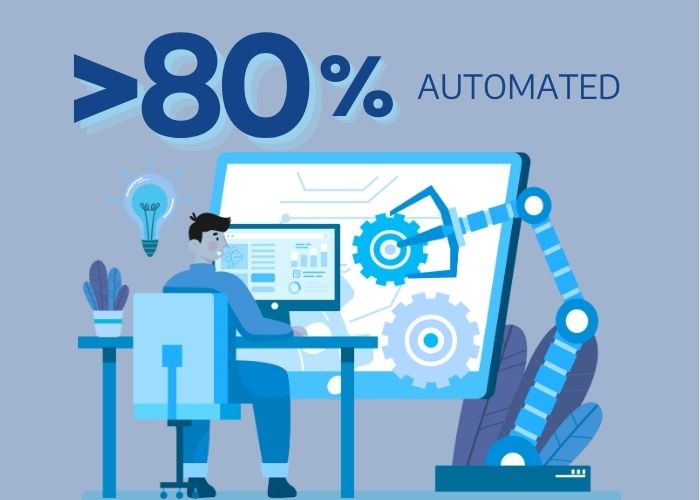
- ≥80% of tagging effort automated.
- 99% efficiency improvement
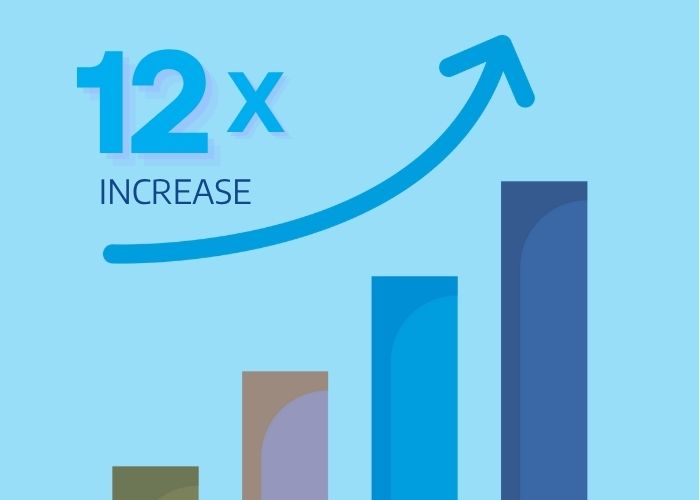
- 12× throughput increase year over year.
- ~30 minutes per book cycle time.
Implementation Roadmap
The 12-week project was delivered in three iterative phases.
Iteration 1 (Weeks 1–4)
- Objective: Establish taxonomy and a baseline for automation.
- Key Activities: Content audit, define textbook → chapter → section → objective taxonomy, set success thresholds (automation, accuracy, cycle time).
- Outcome: Taxonomy v1 approved, baselines set, representative sample prepared for pilot validation.
Iteration 2 (Weeks 5–8)
- Objective: Build and validate the AI tagging pipeline.
- Key Activities: Implement LLM-assisted classification, similarity search, and mapping rules, expose API with JSON schema, pilot on representative textbooks against SME labels.
- Outcome: ≥80% automation and ~30 minutes per book cycle time.
Iteration 3 (Weeks 9–12)
- Objective: Harden and deploy for production scale.
- Key Activities: Add confidence thresholds, exception routing, schema/versioning, duplicate-safe re-runs, integrate with editorial workflow and monitoring.
- Outcome: 12× throughput, standardized metadata powering search, recommendations, and adaptive learning.